
Milam County Hosts Educational Seminar as Texas Faces 32 Confirmed Cases of New World Screwworm
With 32 confirmed cases of New World Screwworm statewide, local officials and agricultural experts are emphasizing vigilance and community awareness to keep the pest under control.

CAMERON, TX — Local residents, ranchers, and pet owners gathered recently for the Milam County New World Screwworm Seminar to discuss the current status, risks, and prevention strategies regarding the recent detection of the parasite in Texas.
With 32 confirmed cases of New World Screwworm statewide, local officials and agricultural experts are emphasizing vigilance and community awareness to keep the pest under control.
A Look at the Numbers and History
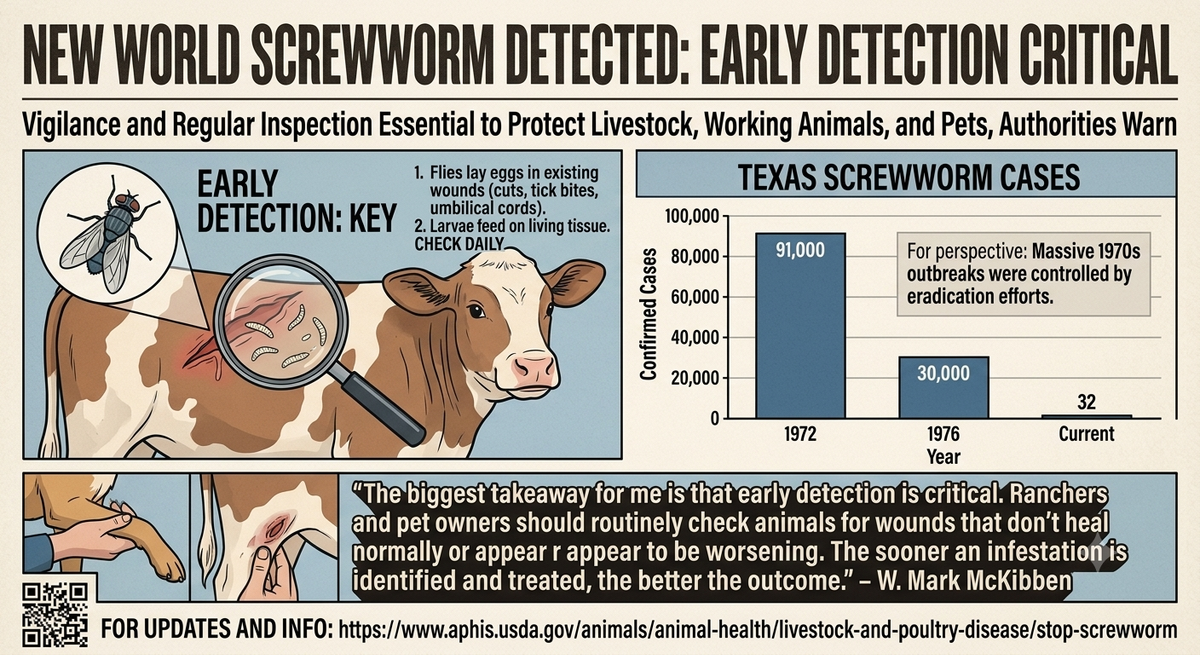
While the current number of cases has raised eyebrows, experts at the seminar provided historical context to put the situation into perspective. In 1972, Texas experienced a massive outbreak with approximately 91,000 cases, followed by roughly 30,000 cases in 1976. Massive, coordinated eradication efforts eventually brought those numbers down, making the current count a reminder of the importance of early intervention.
Local attendee W. Mark McKibben emphasized that while the situation requires attention, it is manageable with the right information.
"The biggest takeaway for me is that early detection is critical," McKibben stated following the seminar. "Ranchers and pet owners should routinely check animals for wounds that don’t heal normally or appear to be worsening. The sooner an infestation is identified and treated, the better the outcome."
Understanding the Threat
Speakers at the seminar clarified that New World Screwworm is not contagious from one animal to another. Instead, the danger comes directly from flies that lay eggs in open or existing wounds. Once the larvae hatch, they feed on the living tissue of the host animal.
Certain animals are at a much higher risk than others:
- Newborn Calves: Especially vulnerable because their healing umbilical cords provide an ideal site for flies to lay eggs.
- Working Animals & Pets: Even a livestock guardian dog was recently infected, though officials confirmed it has since been successfully treated and cured.
- General Livestock & Wildlife: Minor injuries, including simple tick bites or small scratches, can quickly become sites for an infestation.
Staying Vigilant
Because any small puncture can invite the parasite, regular and thorough inspections of all animals—ranging from large livestock herds to household pets—are highly recommended.
"Staying informed is one of the best tools we have to protect our livestock, working animals, wildlife, and pets," McKibben noted, expressing gratitude to the experts and organizers who put together the educational event.
For continuous updates, identification guides, and more information on how to protect your animals, visit the USDA Animal and Plant Health Inspection Service (APHIS) website at: