Roots in the Garden: How Milam County Rooted Texas’ First Girls’ Tomato Club Cultivating a Legacy in Milam County
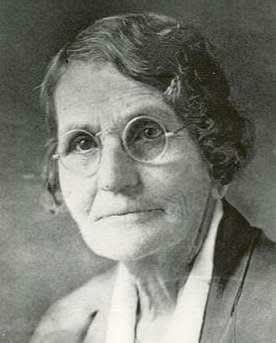
At the direct request of the United States Department of Agriculture (USDA), local high school principal Mrs. Edna Westbrook Trigg agreed to spearhead an ambitious pilot project: introducing rural girls to scientific tomato production and home preservation techniques.


Cameron, TX - Long before the modern era of youth agricultural showcases and streamlined county extension programs, rural education looked vastly different. In 1912, the landscape of Milam County became the testing ground for a revolutionary movement that would change the trajectory of agricultural education for young women across Texas.
At the direct request of the United States Department of Agriculture (USDA), local high school principal Mrs. Edna Westbrook Trigg agreed to spearhead an ambitious pilot project: introducing rural girls to scientific tomato production and home preservation techniques.
Planting the Seeds: 1912 and the Tomato Pioneers
While boys' "Corn Clubs" had already been instituted in Jack County four years prior, rural girls lacked a formalized parallel organization. Stepping up as a USDA "Collaborator" who worked evenings and Saturdays while maintaining her principal duties, Mrs. Trigg successfully organized eleven clubs spanning the length and breadth of Milam County.
The initiative engaged roughly ten girls per club, ranging in age from ten to eighteen. The rules of the club were straightforward yet demanding:
- Each member was assigned to cultivate and manage a tomato crop on one-tenth of an acre of land.
- Participants kept detailed production and financial records.
- Members were rigorously trained
- Education in proper home-canning procedures to preserve surplus yields.
From Milam County Soil to State Stages
The fruits of these young women's labors did not stay confined to local backyards. Armed with home-grown produce and newly mastered canning skills, the girls of Milam County proudly exhibited their canned goods closer to home in Milano and Rockdale.
Momentum quickly accelerated. The young producers took their exhibits to major stages, including the 1913 State Fair of Texas in Dallas and the Waco Cotton Palace. The reception was nothing short of sensational. Their displays outshone expectations, and the proceeds generated from selling their fresh crops and canned goods were so substantial that several participants used the profits to lay the groundwork for college education funds.
The Forerunner to Modern 4-H
The profound success in Milam County proved that rural domestic and agricultural education was both viable and immensely empowering. Mrs. Trigg’s pioneering roadmap laid the administrative foundation for home demonstration work in Texas.
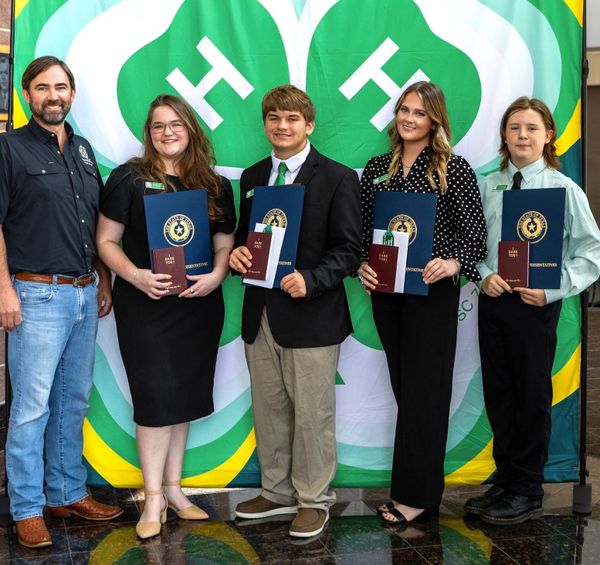
These early Tomato Clubs stand proudly as the direct forerunners of today’s 4-H programs, operating under the supervision of the Texas Agricultural Extension Service. Though generations have passed and the scope of 4-H has broadened to include countless modern projects, the core mission remains unchanged: teaching youth self-reliance, leadership, and practical skills grounded in community stewardship.
Today, a Texas State Historical Marker stands on the Milam County Courthouse square in Cameron (near the historic jail museum lawn), ensuring that the ingenuity of Mrs. Trigg and the hard work of Milam County’s young agricultural pioneers are never forgotten.
Did you know? Edna Westbrook Trigg later moved to Denton County in 1915, where she officially became Texas' first continuous county home demonstration agent, continuing a lifetime of service that earned her induction into the National Agricultural Center and Hall of Fame in 1991.
How has your own family been involved with Milam County agricultural programs or 4-H traditions over the years?