State Mandates and Small-Town Classrooms: What the SBOE's New Bible Curriculum Vote Means for Cameron ISD
Texas State Board of Education (SBOE) voted to approve a new statewide required reading list for public schools that introduces specific biblical stories and passages into the K–12 English and Language Arts curriculum.

CAMERON, TX — A major legislative decision in Austin is set to change what local children read in school. On Friday, the Texas State Board of Education (SBOE) voted to approve a new statewide required reading list for public schools that introduces specific biblical stories and passages into the K–12 English and Language Arts curriculum.
While the policy is scheduled for a staggered rollout starting in the 2030–2031 school year, school districts across Milam County are already looking ahead to see how a sweeping state mandate will alter local classrooms, curriculum budgets, and teacher workloads.
Breaking Down the Reading List
The approved measure stems from a 2023 Texas law requiring the state to designate a consistent foundation of literary texts for every grade level. However, the final 200-text list approved by the board goes far beyond basic literary recommendations, requiring at least one biblical reading in every grade starting in elementary school.
For parents tracking what their children will study, the progression is structured to match reading development:
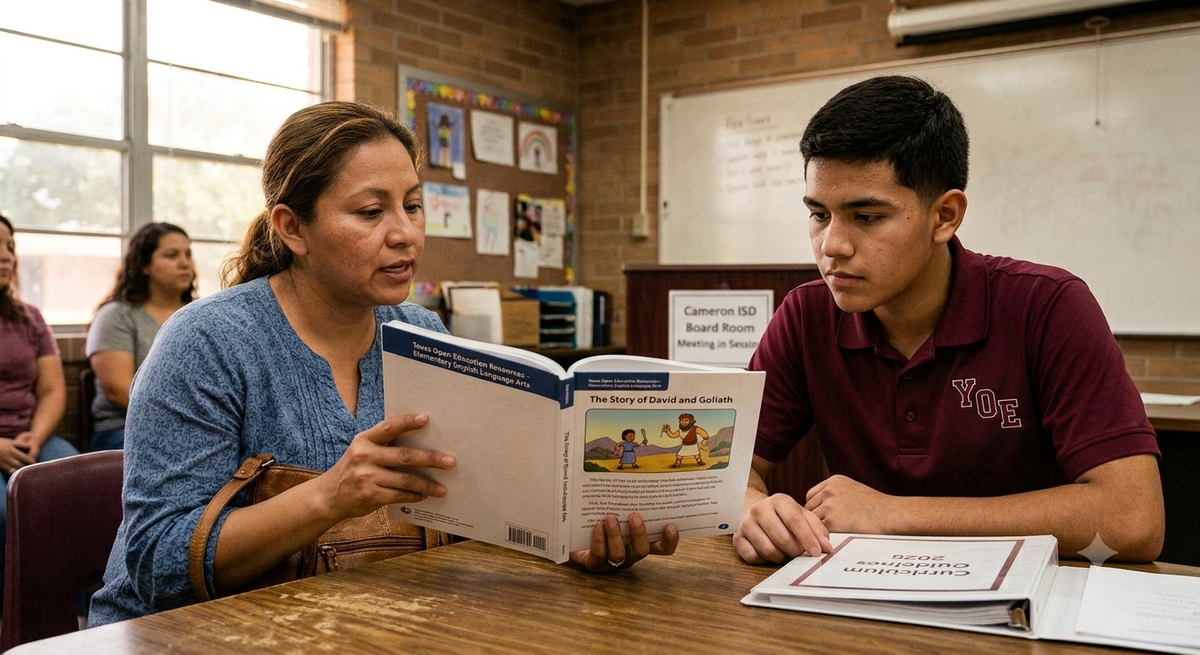
- Early Elementary (K–3): Students will read historic stories like David and Goliath and Daniel and the Lion’s Den. These will be taught side-by-side with secular fables and American historical narratives.
- Fourth Grade & Junior High: The curriculum shifts toward the New Testament. By middle school, students will read specific parables and excerpts from the Sermon on the Mount, focusing on themes like charity and setting aside earthly anxieties.
- Yoe High School: High schoolers will study specific Old and New Testament passages, such as portions of Genesis and Lamentations, paired as foundational context for classic literature like Charles Dickens’ Great Expectations and Jane Austen’s Pride and Prejudice.
The Local Impact: Budgets, Staffing, and Autonomy
For mid-sized and rural districts like Cameron ISD, a massive, centralized curriculum shakeup presents practical challenges that differ significantly from large urban centers like Austin or Houston.
The Financial and Administrative Squeeze
Large school districts often have entire administrative departments dedicated solely to designing curriculum and managing textbook rollouts. In Cameron, administrators wear multiple hats. Reviewing a 200-text mandate, ensuring that classrooms have the physical materials, and reorganizing lesson plans will require a significant amount of administrative time.
Additionally, the state requires teachers to be properly trained on how to approach these texts from a purely academic, non-devotional perspective. Local districts will have to absorb the time and logistical costs of mandatory teacher professional development over the next few years.
Shifting Local Control
Rural Texas communities traditionally value local governance, where the elected school board and local educators have a strong voice in choosing what materials best serve their student body. A rigid, state-mandated reading list naturally limits that local flexibility.
Some educators have expressed concern that balancing a 36-week school year while hitting every single required state text leaves very little room for localized reading initiatives or specialized reading remediation. This is a crucial detail for districts constantly working to maximize performance on the State of Texas Assessments of Academic Readiness (STAAR) tests.
Navigating Community Values and Parent Rights
Milam County is a community deeply rooted in faith and traditional values, and many local families may welcome the inclusion of biblical history as a way to understand the foundational roots of Western literature and American history.
However, public schools are legally required to serve all families, regardless of faith tradition. Texas law explicitly protects a parent's right to formally opt their child out of specific assignments or readings that conflict with their religious beliefs.
In a tight-knit community, managing these individual "opt-out" requests can create logistical hurdles for principals and teachers, who must provide alternative, non-punitive reading assignments for those students. Local campuses will need clear, transparent policies to ensure every family feels respected while maintaining classroom order.
A Four-Year Planning Buffer
The saving grace for local administrators is the timeline. Because the SBOE delayed official implementation until 2030, Cameron ISD and neighboring districts like Rockdale, Thorndale, and Milano have a four-year window to evaluate the curriculum, train staff, and hear from local parents.
The timeline also leaves room for expected legal challenges. Advocacy groups have already indicated plans to challenge the mandate in federal court on First Amendment grounds. Whether the curriculum ever makes it to a desk in Cameron depends entirely on how those legal battles play out in the years ahead.