
Flesh-Eating Parasite Sparking Statewide Alarm: What Cameron Needs to Know About the New World Screwworm
A formidable agricultural threat has officially re-entered the Lone Star State. Following the first domestic detection of the New World Screwworm (NWS) in South Texas on June 3, 2026, state and federal officials are scrambling to contain an active and expanding outbreak.

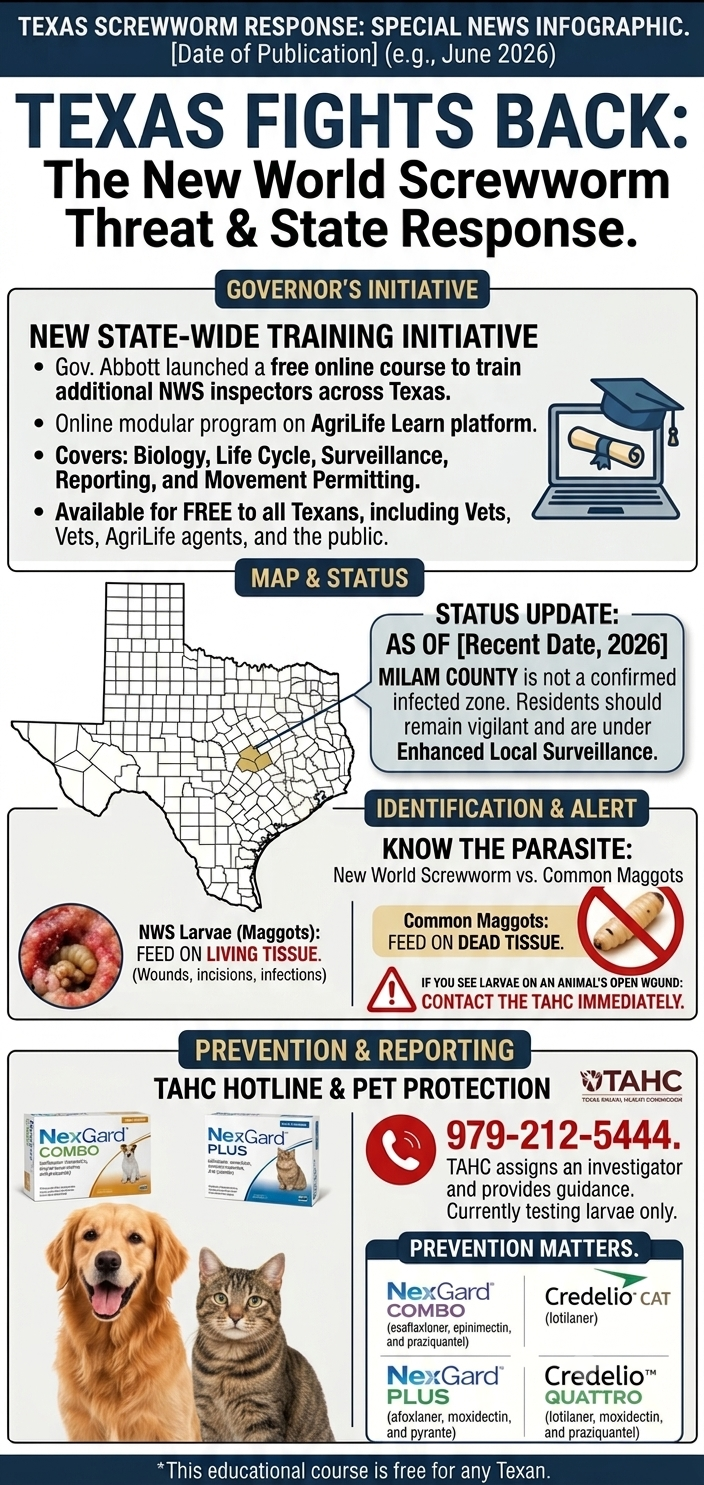
Milam County - A formidable agricultural threat has officially re-entered the Lone Star State. Following the first domestic detection of the New World Screwworm (NWS) in South Texas on June 3, 2026, state and federal officials are scrambling to contain an active and expanding outbreak.
With confirmed infestations rising across counties like Zavala, La Salle, and Gillespie, Governor Greg Abbott has issued a statewide disaster declaration covering all 254 Texas counties. While Cameron County is not currently labeled an official infested zone, our proximity to the border and thriving livestock, pet, and wildlife populations mean local vigilance isn’t just recommended—it’s mandatory.
What is the New World Screwworm?
Unlike standard blowfly maggots that uniquely consume dead or decaying tissue, NWS larvae are aggressive parasites that feed exclusively on the **living tissue** of warm-blooded animals.
A female screwworm fly lays her eggs near the edge of an open wound. Once hatched, the larvae burrow deep into the flesh, creating pocket-like cavities. If left untreated, these infestations cause severe tissue damage, secondary infections, and can quickly become fatal.
- Primary Targets: Open wounds, surgical incisions, skin infections, branding marks, and even the unhealed umbilical areas of newborn livestock or pets.
- The Look: The adult flies closely resemble ordinary blowflies, making visual identification unreliable. State health officials are currently testing larvae only.
The State’s Response: More Eyes on the Ground
Because a widespread infestation threatens Texas' $15 billion cattle industry and delicate wildlife ecosystems, the state is moving fast.
Over the weekend, Governor Abbott launched a free online NWS Inspector training course delivered through the Texas A&M AgriLife Learn platform. Developed alongside the USDA and the Texas Animal Health Commission (TAHC), this program is designed to quickly train and certify livestock owners, veterinarians, and local officials to issue official NWS Treatment/Movement Certificates. These certificates are now mandatory for moving livestock out of officially designated infested zones.
While the first phase targets vets, agricultural agents, and livestock deputies, the educational course is open and free to all Texans who want to learn how to spot and treat this parasite.
How to Protect Your Animals
Preventing the spread of NWS requires a community-wide effort across three core sectors:
1. For Pet Owners (Dogs and Cats)
Screwworms do not discriminate between a prize calf and a family pet. If your pet has an outdoor lifestyle or an existing wound, take immediate precautions:
- Keep Up with Parasite Prevention: Ensure your pets are on year-round parasite control. Approved medications that aid in protection include NexGard COMBO or Credelio CAT for cats, and NexGard PLUS or Credelio QUATTRO for dogs.
- Inspect Wounds Daily: Check pets daily for any unusual sores, foul-smelling wounds, or visible larval movement. Keep animals with open wounds indoors.
2. For Livestock Producers
Ranchers are the frontline defense against an economic catastrophe.
- Monitor Newborns: Pay extra attention to newborn calves, lambs, and kids, inspecting their umbilical areas closely.
- Postpone Non-Essential Procedures: If possible, delay elective procedures that cause open wounds (such as dehorning or castration) until the outbreak is contained, or treat wounds immediately with approved topical protectants.
- Inspect Before Moving: Thoroughly check all livestock before transporting them.
For Wildlife Managers and Enthusiasts
Our local white-tailed deer and feral hog populations can act as stealth vectors for the parasite.
Report any wildlife displaying signs of severe lethargy, unusual head-shaking, or visible, foul-smelling lesions to the Texas Parks and Wildlife Department (TPWD).
Think You Found One? Who to Call
If you discover larvae in an animal's wound, do not attempt to clear it without documenting it first.
TAHC Hotline: Report suspected cases immediately to the Texas Animal Health Commission at 979-212-5444.
The TAHC will dispatch an investigator to collect samples and provide direct medical guidance. Early detection is the single most effective tool Texas has to push this parasite back out of our borders.
To register for the free educational course, visit the AgriLife Learn platform online.