Keep Food Safety in Mind During Your Summer Road Trips
While planning routes, attractions, and snacks is part of the fun, it's just as important to make food safety part of your travel plans. A little preparation can help prevent foodborne illness and keep everyone healthy throughout the journey.
Cameron, TX - Summer road trips are a great way to explore new places, visit family, or simply enjoy the open road. While planning routes, attractions, and snacks is part of the fun, it's just as important to make food safety part of your travel plans. A little preparation can help prevent foodborne illness and keep everyone healthy throughout the journey.
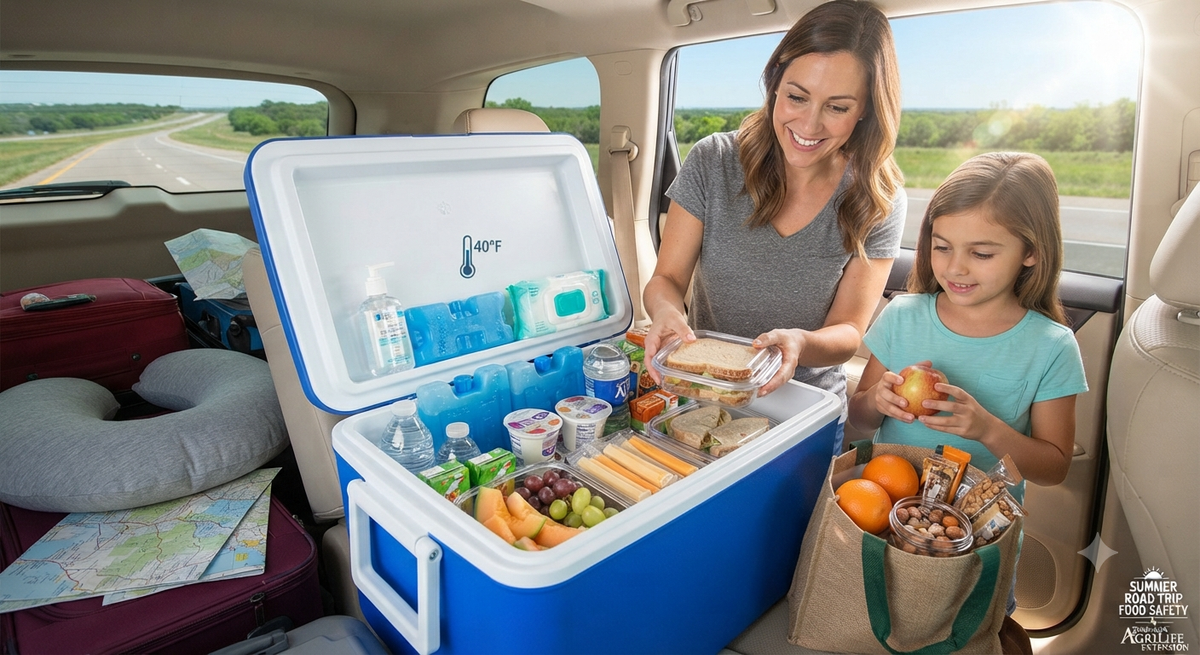
Whether you're packing a cooler filled with sandwiches and fresh fruit or bringing along simple snacks like peanut butter wraps, proper food handling is essential. Long hours in the car, warm temperatures, and limited access to handwashing facilities can create the perfect conditions for harmful bacteria to grow if food isn't stored correctly.
The first step to safe travel meals is keeping cold foods cold. Perishable items such as sandwiches, wraps, meat, cheese, yogurt, and cut fruit should be stored in an insulated cooler with plenty of ice packs or frozen water bottles. Foods should remain at 40 degrees Fahrenheit or below to help prevent bacterial growth.
Packing the cooler correctly can also make a difference. Store raw meats separately from ready-to-eat foods to prevent cross-contamination, and place items you'll need most often near the top of the cooler. Limiting the number of times the cooler is opened helps keep the cold air inside and the food at a safe temperature.
Travelers should also remember that perishable foods should not remain unrefrigerated for more than two hours, or just one hour when outdoor temperatures exceed 90 degrees. If there's any question about whether a food is still safe to eat, it's always best to throw it away.
Good hand hygiene is another important part of food safety while traveling. Since handwashing stations may not always be available, pack hand sanitizer, disinfecting wipes, paper towels, and napkins to clean hands before eating and to help keep surfaces clean.
Choosing travel-friendly foods can also make meal planning easier. Shelf-stable options such as peanut butter wraps, whole fruits like apples and oranges, nuts, seeds, and dried fruit are excellent choices because they require little preparation and are less likely to spoil. Foods that require constant refrigeration should only be packed if they can be kept cold throughout the trip.
Finally, stay hydrated by bringing bottled water or a clean refillable water bottle. Store food and beverages in clean, airtight containers to prevent leaks and contamination, and label homemade foods if they were prepared several days before departure.
With a little planning and proper food handling, families can spend less time worrying about food safety and more time making memories on the road. Safe food practices help ensure that the only thing travelers bring home from their vacation is great experiences.
Please make sure and go in and LIKE the page to get information about Milam County Family and Community Health! FCH facebook:
The members of Texas A&M AgriLife will provide equal opportunities in programs and activities, education, and employment to all persons regardless of race, color, sex, religion, national origin, age, disability, genetic information, veteran status, sexual orientation or gender identity and will strive to achieve full and equal employment opportunity throughout Texas A&M AgriLife. The Texas A&M University System, U.S. Department of Agriculture, and the County Commissioners Courts of Texas Cooperating.