The Cost of In a Hurry: Why Our Roads Are Claiming Too Many Lives
Over the past few years, our rural highways and regional corridors—U.S. 77, U.S. 79, U.S. 190, Highway 36, FM 485, and the bustling stretch of I-35—have become sites of unbearable loss.

Milam County, TX - Every morning across Milam and neighboring Central Texas counties, hundreds of us pull out of our driveways for the ordinary routines of life. We drive to work, head into town for groceries, drop kids off at school, or head home after an honest day’s shift.
Yet far too often, those simple, everyday journeys end in flashing lights, shattered glass, and permanent heartbreak.
Over the past few years, our rural highways and regional corridors—U.S. 77, U.S. 79, U.S. 190, Highway 36, FM 485, and the bustling stretch of I-35—have become sites of unbearable loss. Behind every headline and TxDOT statistic are local sons, daughters, parents, and neighbors whose futures were cut short in an instant.
The heartbreaking truth is clear: excessive speed, impatience, and aggressive passing in no-passing zones have turned routine travel into a gamble. When drivers push the speedometer or gamble with a dangerous pass just to shave two minutes off a commute, it is everyday families who pay the ultimate price.
A Community Carrying Too Many Names
The names etched in our community’s memory represent empty chairs at dinner tables and unfulfilled dreams:
- January 2023 (U.S. 190 between Cameron and Milano): The heartbreaking rollover that took three young Cameron lives and former Yoe High School student-athletes—Phabian Bynaum (19), Davarius Bynaum (20), and Malik Thomas (21).
- April 2025 (State Highway 36 at the Milam/Burleson County Line): A devastating multi-vehicle crash involving a commercial semi-truck that took three lives, including 16-year-old student Connor McCaffety and his parents.
- December 2025 (U.S. 79 Corridor): A high-speed multi-vehicle collision that claimed the lives of two teenagers, ages 17 and 18, just before Christmas.
- January 2026 (FM 485): A head-on collision caused by an improper pass in a no-passing zone that took the life of 43-year-old Cameron resident Cody Blaine Wall and left a 20-year-old driver critically injured.
- May 2026 (U.S. 79 near CR 334): A two-vehicle collision that cut short the life of 34-year-old Michael Tyler Morton.
- August 2026 (I-35 Corridor): High-speed multi-vehicle collisions that shut down major travel lanes for hours, leaving families waiting by phones and in emergency rooms for answers that come far too late. Taking the life of two men and injuries to others.
These tragedies do not discriminate between two-lane farm-to-market roads and multi-lane interstates. Whether it is a teen just beginning adulthood or a parent returning home from work, the physics of speed and recklessness remain unforgiving.
The Reality of Speed on Rural Corridors
Rural highways carry unique risks. Limited shoulders, frequent blind curves, heavy agricultural and commercial truck traffic, and sudden turn-offs mean reaction times must be razor-sharp.
When speed enters the equation, reaction distance disappears. A vehicle traveling at 75 mph covers 110 feet every single second. Taking an extra five seconds to assess a passing zone or slowing down by 10 miles per hour rarely changes an arrival time by more than a couple of minutes, but it frequently determines whether everyone makes it home alive.
A Call to Slow Down
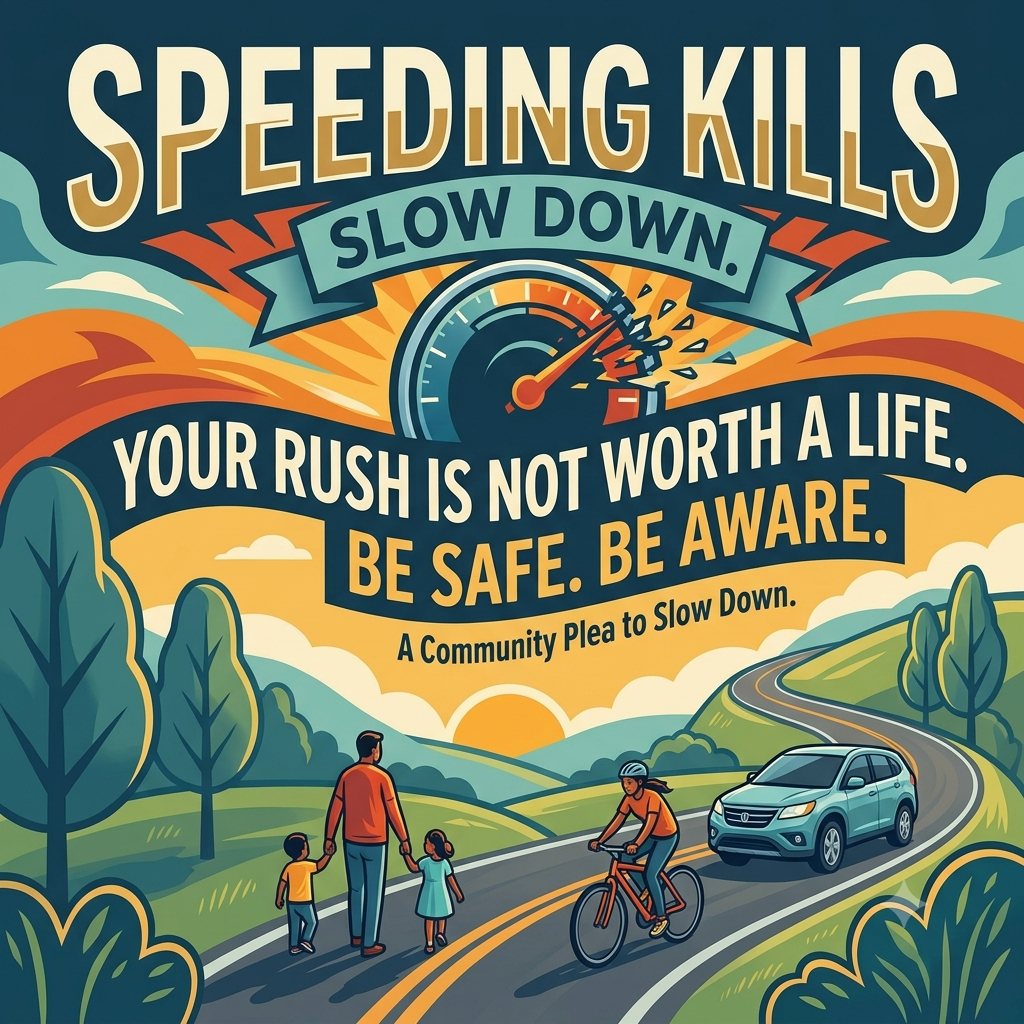
No errand is so urgent, no meeting so critical, and no commute so important that it justifies risking a human life.
As a community, the most meaningful way to honor the memories of the neighbors and young people we have lost is to change how we drive. Slow down on our county roads and state highways. Obey no-passing zones. Put the phone down. Leave five minutes earlier so that being in a hurry never costs someone else their tomorrow.